UniCities: practical cases, smart solutions, and reconstruction, through the eyes of students
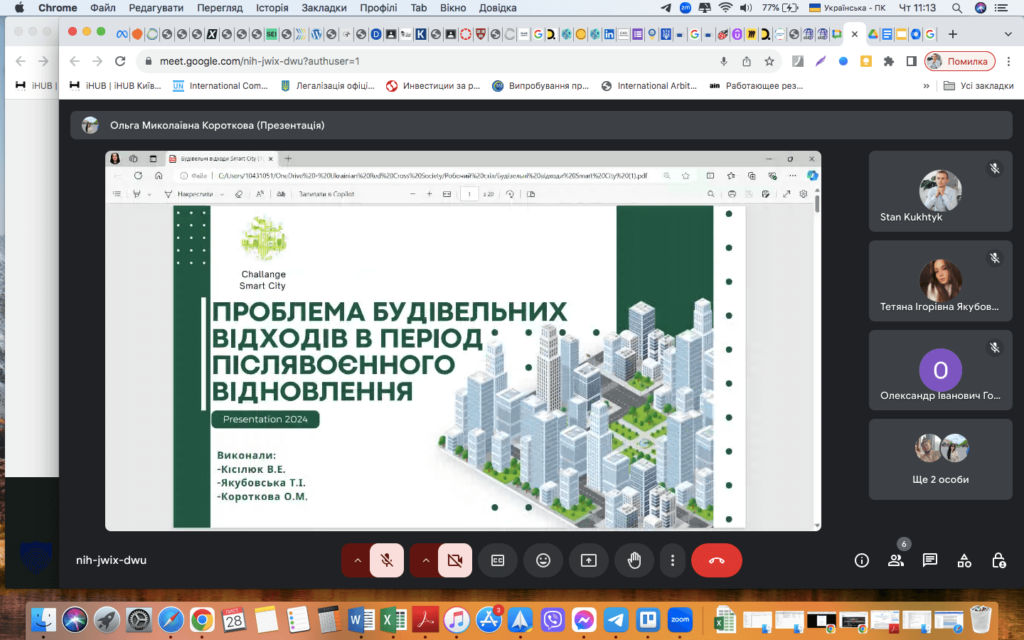
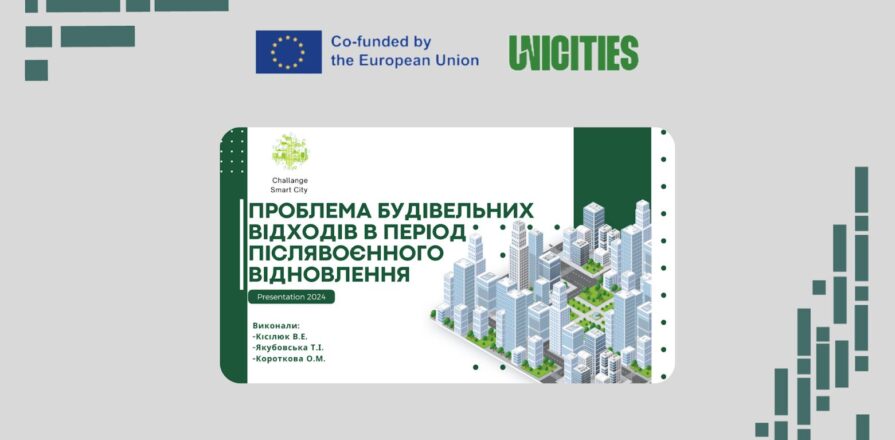
On 28 November 2024, students of the ISTU presented a research project to analyse the state and technologies of construction waste management in the context of military operations and the post-war reconstruction of Ukraine. The analytical work was prepared within the framework of the discipline “Smart Cities, Adaptation, and Mitigation Strategies”, developed with the support of the UniCities project.
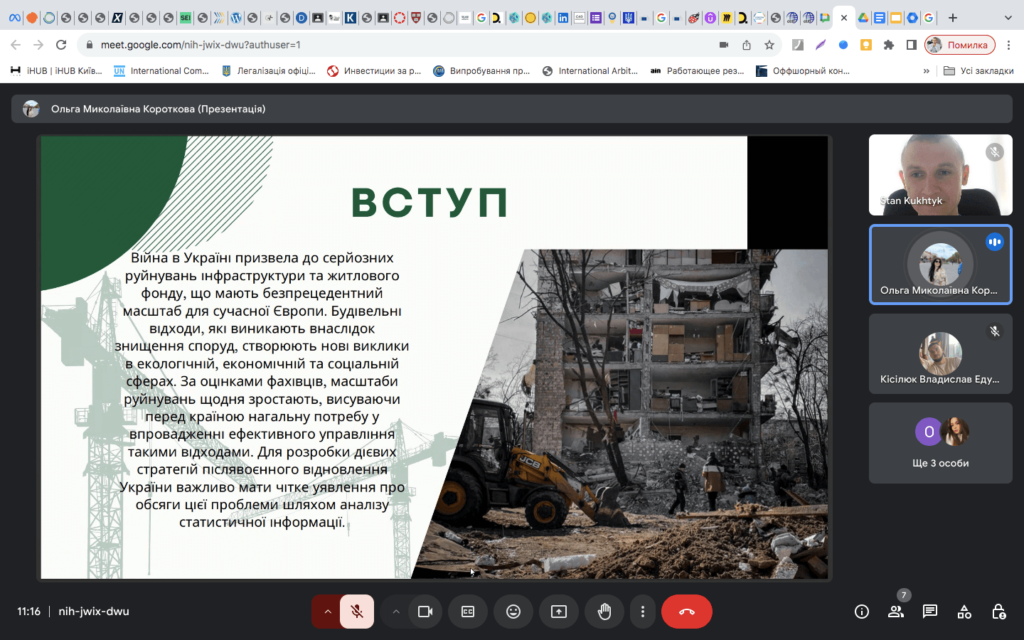
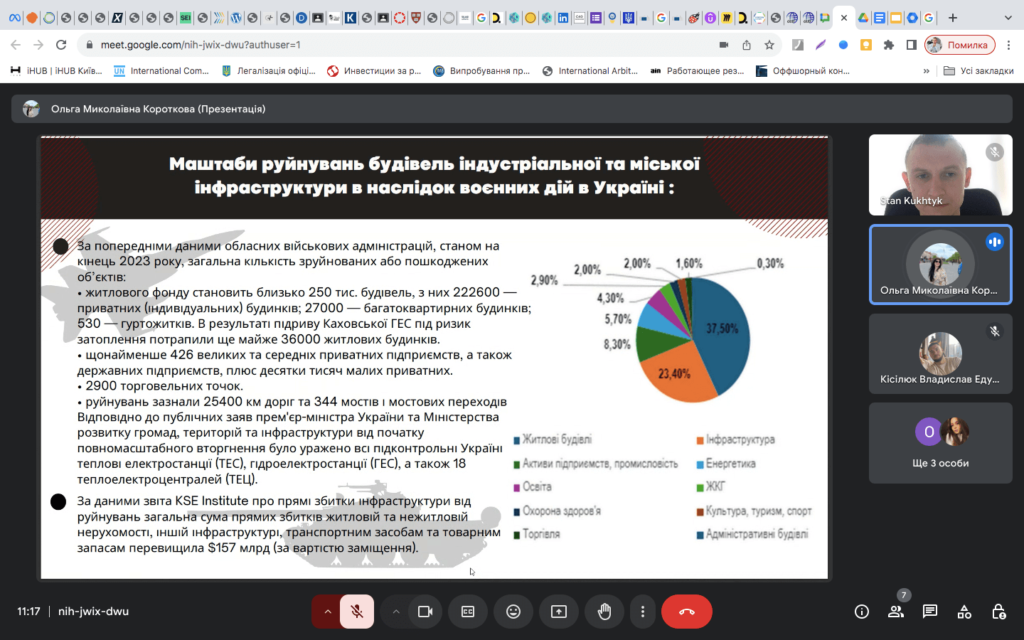
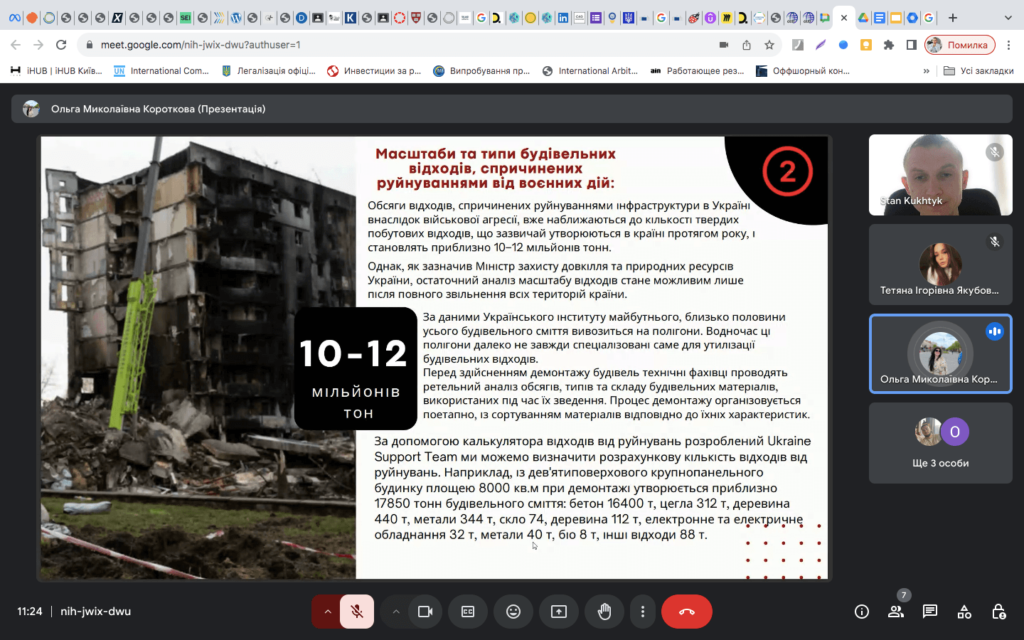
The students focused on integrating modern technologies into the smart city concept. The scale of destruction caused by the war in Ukraine is unprecedented in modern Europe. The destroyed infrastructure includes residential buildings, roads, bridges, and power plants. According to the regional military administrations, by the end of 2023, about 250,000 residential buildings, 344 bridges, and more than 25,000 kilometres of roads had been damaged or destroyed. The total direct damage to infrastructure, according to KSE, exceeded $157 billion.
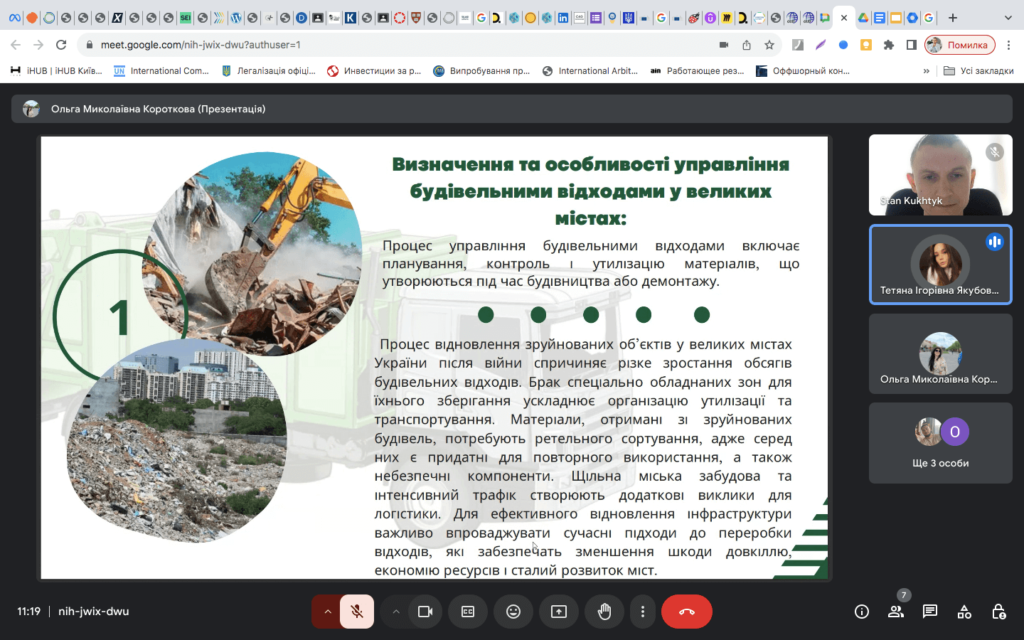
This destruction creates a huge amount of construction waste that needs to be managed effectively. Without specially equipped storage areas, high-quality sorting, and optimized logistics, the problem is only exacerbated.
To effectively restore infrastructure, it is important to introduce modern approaches to waste management that will reduce environmental damage, save resources and ensure sustainable urban development. Students proposed the integration of innovative solutions within the framework of the smart city concept, including:
- real-time monitoring using IoT and digital platforms;
- intelligent waste sorting using artificial intelligence;
- recycling of materials into secondary resources, focusing on concrete, metal, wood, and glass;
- informing citizens through mobile applications and information campaigns;
- smart containers with occupancy sensors to optimize waste collection;
- optimization of transport logistics using Big Data;
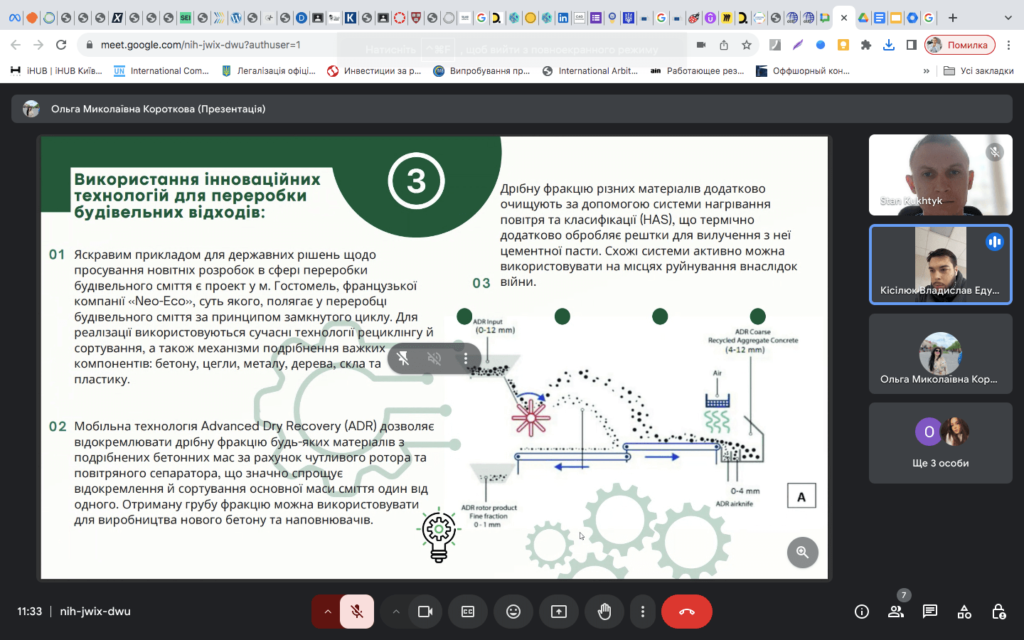
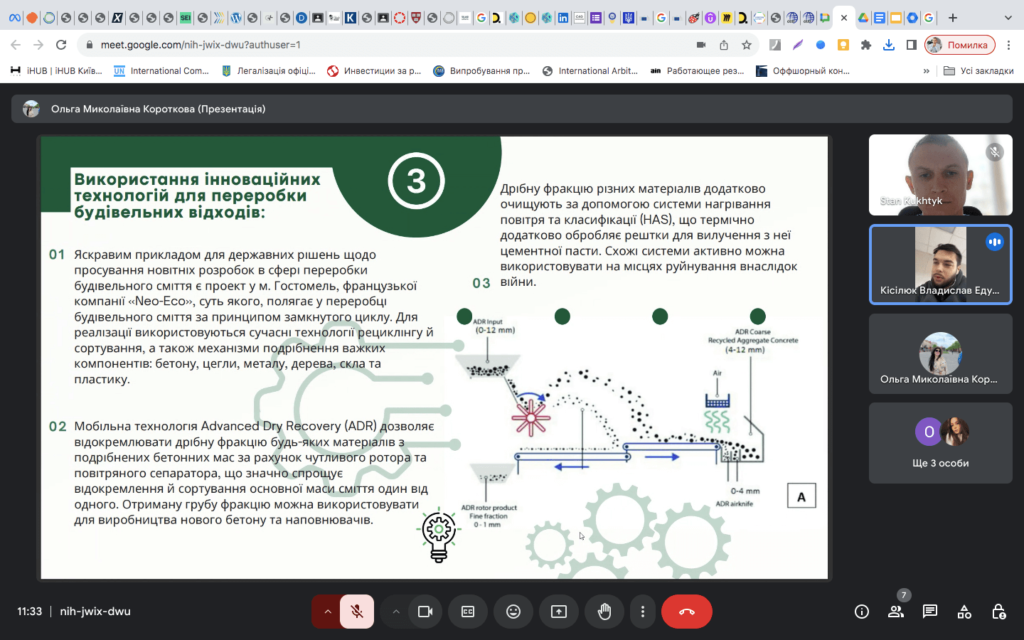
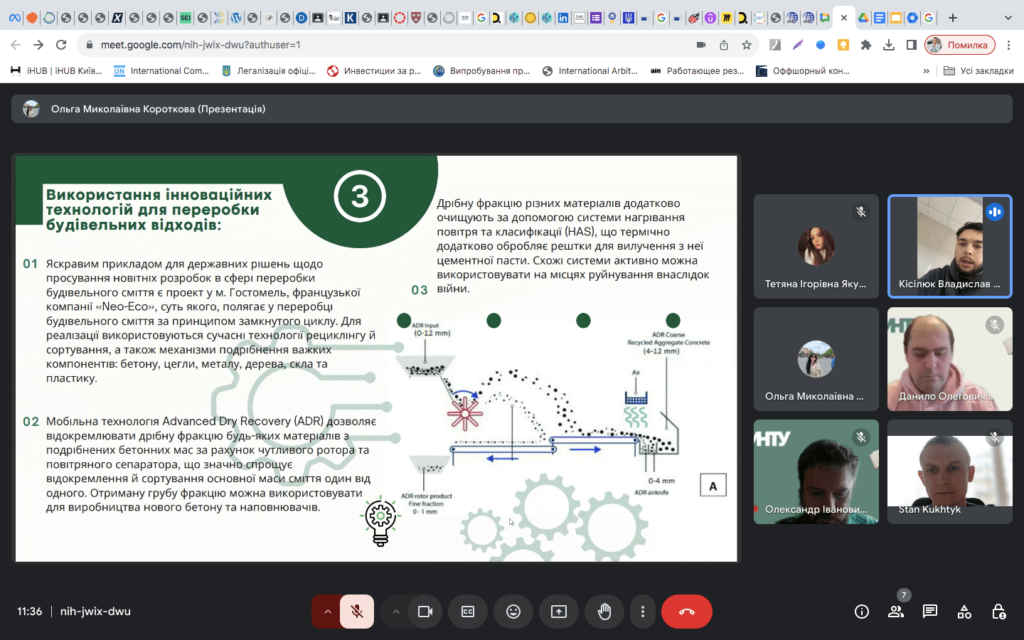
- introducing technologies such as Advanced Dry Recovery (ADR) to recycle waste directly at the destruction site.
It should be noted that the case study included an analysis of international experience, in particular Croatia and Syria, where construction waste was effectively used to rebuild infrastructure after the war. The presentation emphasized the importance of an innovative approach to construction waste management in the post-war reconstruction.
Integrating smart city technologies will not only help reduce environmental damage. Still, it will also contribute to sustainable urban development, resource conservation, and active participation of citizens in the reconstruction of Ukraine. Education and practical cases can be powerful tools for solving complex problems of our time and inspire students to create practical, innovative solutions to restore urban infrastructure, forming a new generation of leaders and professionals.